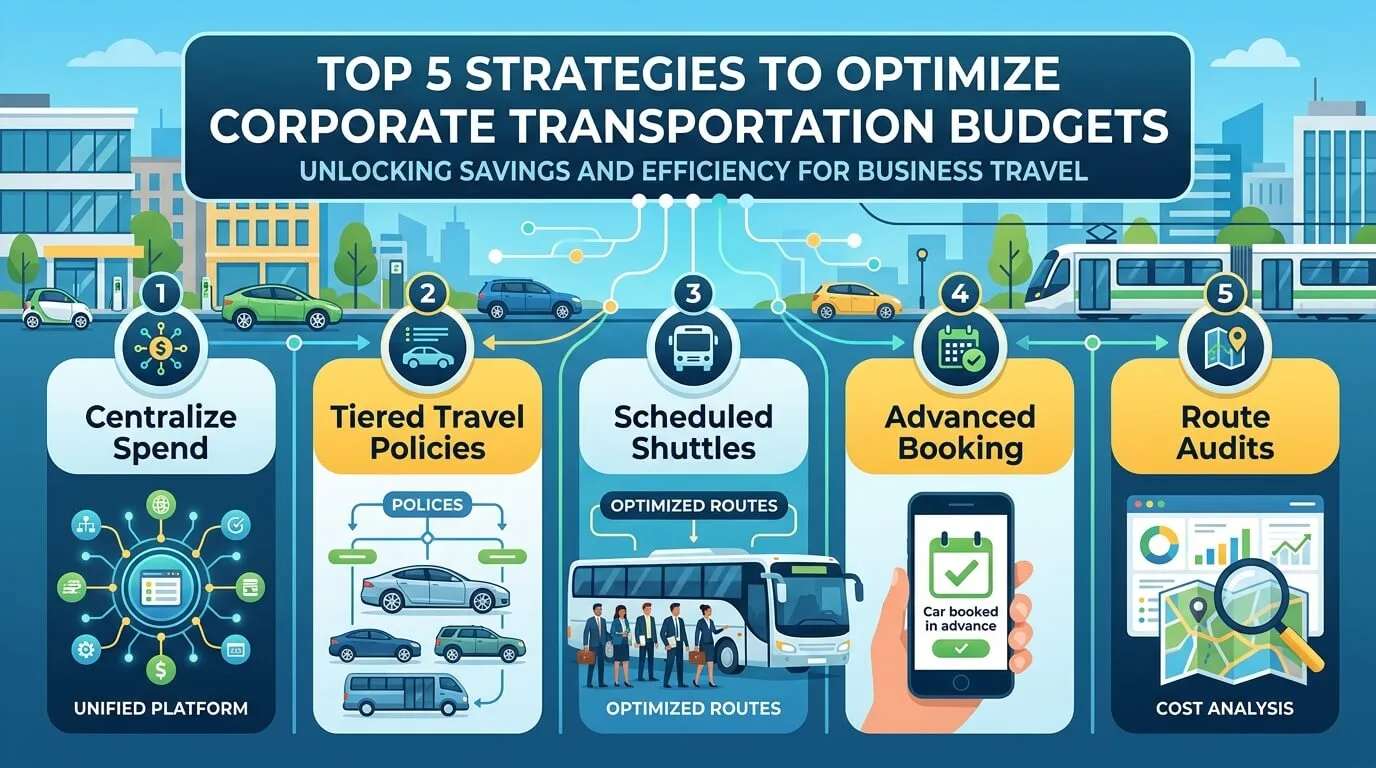
Corporate travel and ground transportation represent one of the largest controllable expenses for mid-to-large enterprises. As businesses scale, managing ride-hailing services, rentals, executive transit, and employee commutes without a cohesive strategy can quickly lead to budget overruns. Optimizing your corporate transportation budget isn't about cutting necessary travel; it is about eliminating inefficiencies, standardizing policy, and leveraging modern travel technology.
1. Centralize Spend with a Unified Corporate Platform
When employees book their own transit across disparate apps or submit fragmented receipts, visibility drops to zero. Transitioning to a centralized corporate transportation management system provides immediate oversight and leverage.
- Negotiated Enterprise Rates: Consolidating your volume under a single vendor or management platform unlocks volume discounts and preferred rates.
- Automated Expense Tracking: Direct integration with accounting tools eliminates manual reporting, reduces administrative overhead, and prevents expense fraud.
- Real-Time Analytics: Central dashboards let travel managers monitor peak usage times, popular routes, and spending trends across departments.
2. Establish Clear, Tiered Travel Policies
Vague travel policies invite unnecessary spending. A well-defined policy sets explicit boundaries while maintaining flexibility based on seniority, role, and context.
| Tier / Context | Approved Transit Type | Booking Rules |
|---|---|---|
| Executive / Client-Facing | Black Car / Premium Rideshare | Pre-approved for high-stakes meetings or executive travel. |
| Standard Business Travel | Standard Rideshare / Public Transit | Requires advance booking; capped maximum per-ride rate. |
| Daily Employee Commute | Shared Shuttles / Commuter Subsidies | Fixed monthly allowance via integrated transit cards. |
3. Shift from On-Demand Rides to Scheduled Shuttles
For recurring transit needs—such as moving employees between corporate campuses, transit hubs, or off-site events—relying on individual rideshares during surge pricing is a major budget drain. Switching to dedicated corporate shuttles or route-optimized vans stabilizes monthly costs.
- Predictable Fixed Costs: Contracting dedicated routes eliminates surge pricing and unpredictable fare fluctuations.
- Higher Capacity Utilization: Transporting teams together drastically lowers the cost-per-seat compared to individual taxis or rideshares.
4. Leverage Advanced Booking and Dynamic Capping
Last-minute bookings consistently carry a premium across all modes of transportation. Implementing automated travel management tools enforces cost-conscious habits automatically.
- Advance Booking Mandates: Require non-emergency transit to be booked at least 24–48 hours in advance to secure baseline pricing.
- Dynamic Price Caps: Set automated caps within booking portals that prevent users from selecting premium vehicle classes or high-surge options when standard alternatives exist.
5. Conduct Monthly Vendor and Route Audits
Cost optimization is an ongoing discipline, not a one-time project. Regular audits keep vendors accountable and highlight emerging inefficiencies before they become systemic habits.
- Route Optimization: Analyze frequent taxi and rideshare routes to see if bulk passes, shuttle services, or partnerships with local transit authorities would be cheaper.
- Vendor SLA Compliance: Ensure preferred rental car and car service vendors are consistently honoring contract pricing without hidden fees or unapproved surcharges.